
Mars exploration database

All Missions

Every mission ever sent to the Red Planet: orbiters, landers, rovers and the helicopter that flew. Filter, explore the chronology and open each file.

64MissionsLaunched
8ActiveWorking now
50%Success rateReached their goal
7Rovers
13Landers
30Orbiters
1Helicopters

Chronology of Mars exploration

Drag, scroll or use the arrows. The bars show how many missions launched each year: they cluster around the launch windows that open every 26 months.

ActiveCompletedFailedUpcoming
More filters

Showing 12 of 13 missions

Clear filters
Completed · full success
CNSA

Tianwen-1 (Lander)

Part of Zhurong

The CNSA's Tianwen-1 mission marked China's first successful landing on the Martian surface with a lander and the Zhurong rover in Utopia Planitia. After exceeding its designed lifespan and completing its scientific objectives on geology and the subsurface, the primary surface mission concluded successfully.

Lander
Completed · full success
NASA

InSight (Interior Exploration using Seismic Investigations, Geodesy and Heat Transport)

InSight was a NASA stationary lander designed to investigate the deep interior and internal structure of Mars. Launched in May 2018, it deployed seismological and thermal instruments in Elysium Planitia, successfully mapping the planet's crust, mantle, and core for the first time. The mission concluded in December 2022 after its power was depleted due to dust accumulation.

Lander
Failed · landing failure
ESA

Schiaparelli EDM

Schiaparelli EDM (Entry, Descent and Landing Demonstrator Module), launched on March 14, 2016 as part of the ExoMars mission, was an ESA and Roscosmos technology demonstrator designed to validate entry, descent, and landing systems on Mars. After successfully separating from the TGO orbiter on October 16, the module began its atmospheric descent on October 19, but a saturation in the inertial measurement unit caused an erroneous altitude calculation, premature parachute deployment, and the subsequent fatal impact on the surface of Meridiani Planum.

Lander
Completed · full success
NASA

Phoenix (Mars Phoenix Lander)

Phoenix, launched by NASA in August 2007, was the first mission to successfully land on the arctic polar plains of Mars. It touched down in Vastitas Borealis in May 2008, confirming the presence of subsurface water ice and detecting perchlorates in the regolith during its extended mission before ceasing operations in November 2008.

Lander
Failed · landing failure
ESA

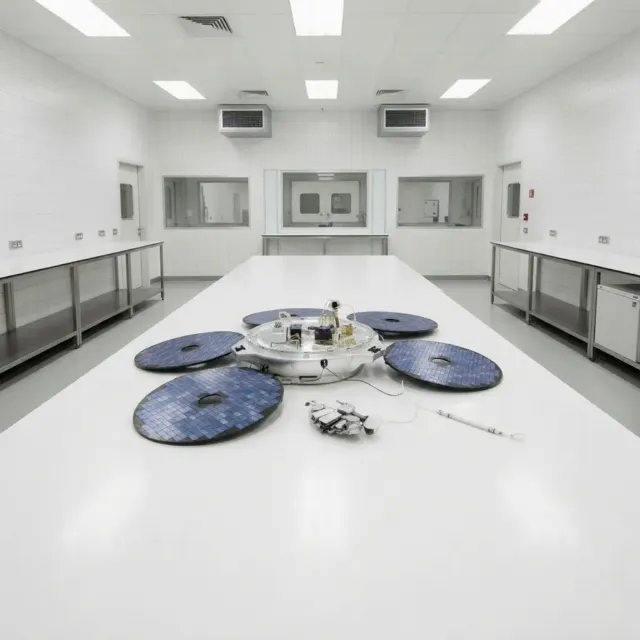
Beagle 2

Beagle 2, an ambitious British lander launched in 2003 alongside Mars Express, aimed to search for chemical traces of life in Isidis Planitia. After landing on Christmas Day, complete silence followed. In 2015, orbital images revealed its cruel fate: it landed intact, but its solar panels failed to fully deploy, trapping its radio antenna and condemning the probe to eternal isolation.

Lander
Failed · landing failure
NASA

Deep Space 2 (DS2)

Deep Space 2 (DS2), known as the Mars Microprobe Project, consisted of two innovative impact penetrator probes ("Scott" and "Amundsen") launched by NASA to study the Martian subsurface. Following their arrival on December 3, 1999, communication could not be established, and the mission was officially declared a failure on March 13, 2000.

Lander
Completed · full success
NASA

Mars Pathfinder

Launched in 1996, Mars Pathfinder was the first completed mission under NASA's "faster, better, cheaper" philosophy. It pioneered the use of an airbag landing system and successfully deployed the first rover on Mars, Sojourner. The mission landed in Ares Vallis, returned over 17,000 images, and performed in-situ chemical analysis of rocks and soil, far exceeding its expected operational lifespan.

Lander
Completed · full success
NASA

Viking 2 Lander

Part of Viking 2

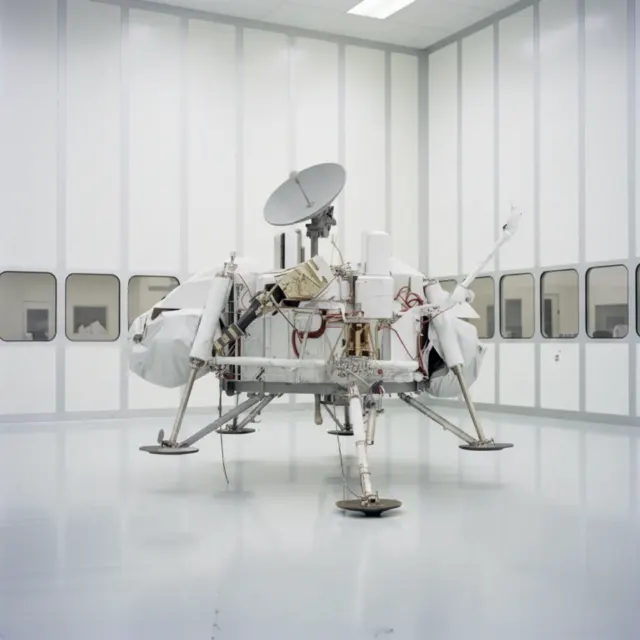
The Viking 2 Lander touched down in Utopia Planitia on September 3, 1976. It operated for 1281 sols, far exceeding its planned 90-day lifespan, until battery failure on April 11, 1980. It was the first mission to photograph seasonal water frost on the Martian surface and to successfully operate a seismometer on the planet, in addition to conducting controversial biological experiments.

Lander
Completed · full success
NASA

Viking 1 (Lander)

Part of Viking 1

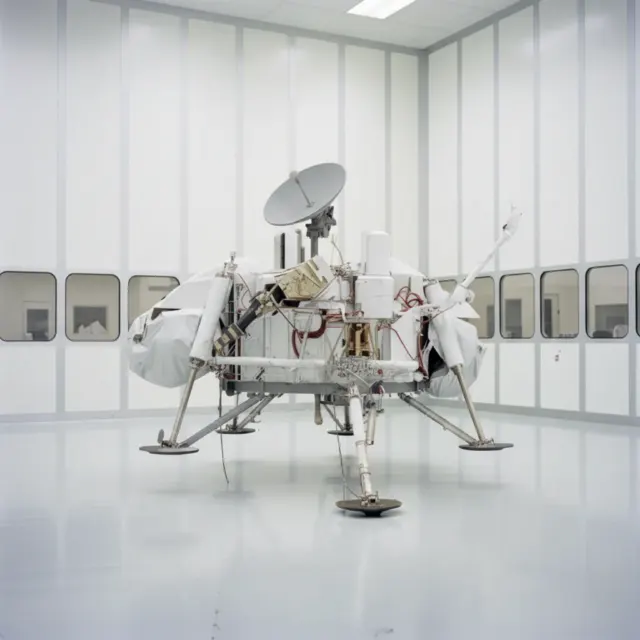
NASA's Viking 1 mission, launched in 1975, was a historic milestone. Comprising an orbiter and a lander, it achieved the first successful, long-duration US landing on Mars on July 20, 1976. While the orbiter mapped the planet, revealing river valleys, the lander conducted the first in-situ experiments to search for life, yielding ambiguous results that redefined Martian exploration.

Lander
Failed · landing failure
OKB-1

Mars 6

Launched on August 5, 1973, the Mars 6 mission consisted of a flyby bus and a lander. On March 12, 1974, the lander separated and entered the atmosphere, transmitting in-situ data for the first time for 224 seconds. However, contact was abruptly lost at the moment of retrorocket activation, resulting in a high-speed impact, likely due to the degradation of electronic components.

Lander
Failed · contact lost before meeting objectives
OKB-1

Mars 3 (Lander)

Part of Mars 3

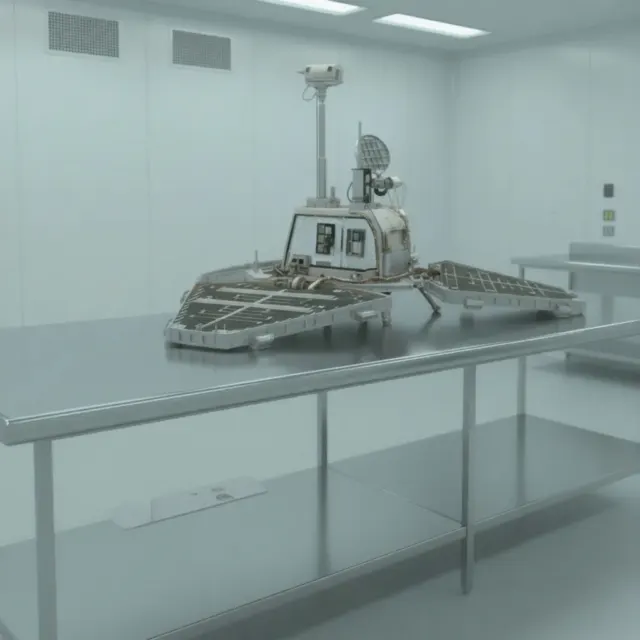
The USSR's Mars 3 mission (1971) was a historic partial success. Its orbiter functioned, but the lander, despite achieving the first-ever soft landing on Mars, only transmitted for 20 seconds. A massive global dust storm is believed to have caused the failure.

Lander
Failed · landing failure
OKB-1

Mars 2 (Lander)

Part of Mars 2

The Mars 2 mission (USSR, 1971) was a dual orbiter and lander mission. It arrived during a global dust storm. The orbiter successfully entered orbit, but its science was limited by the dust. The lander failed due to an incorrect entry angle and crashed, becoming the first human object to impact Mars.

Lander