
Mars exploration database

All Missions

Every mission ever sent to the Red Planet: orbiters, landers, rovers and the helicopter that flew. Filter, explore the chronology and open each file.

64MissionsLaunched
8ActiveWorking now
50%Success rateReached their goal
7Rovers
13Landers
30Orbiters
1Helicopters

Chronology of Mars exploration

Drag, scroll or use the arrows. The bars show how many missions launched each year: they cluster around the launch windows that open every 26 months.

ActiveCompletedFailedUpcoming
More filters

Showing 12 of 30 missions

Clear filters
En route
NASA

ESCAPADE Gold (SIMPLEx-4B)

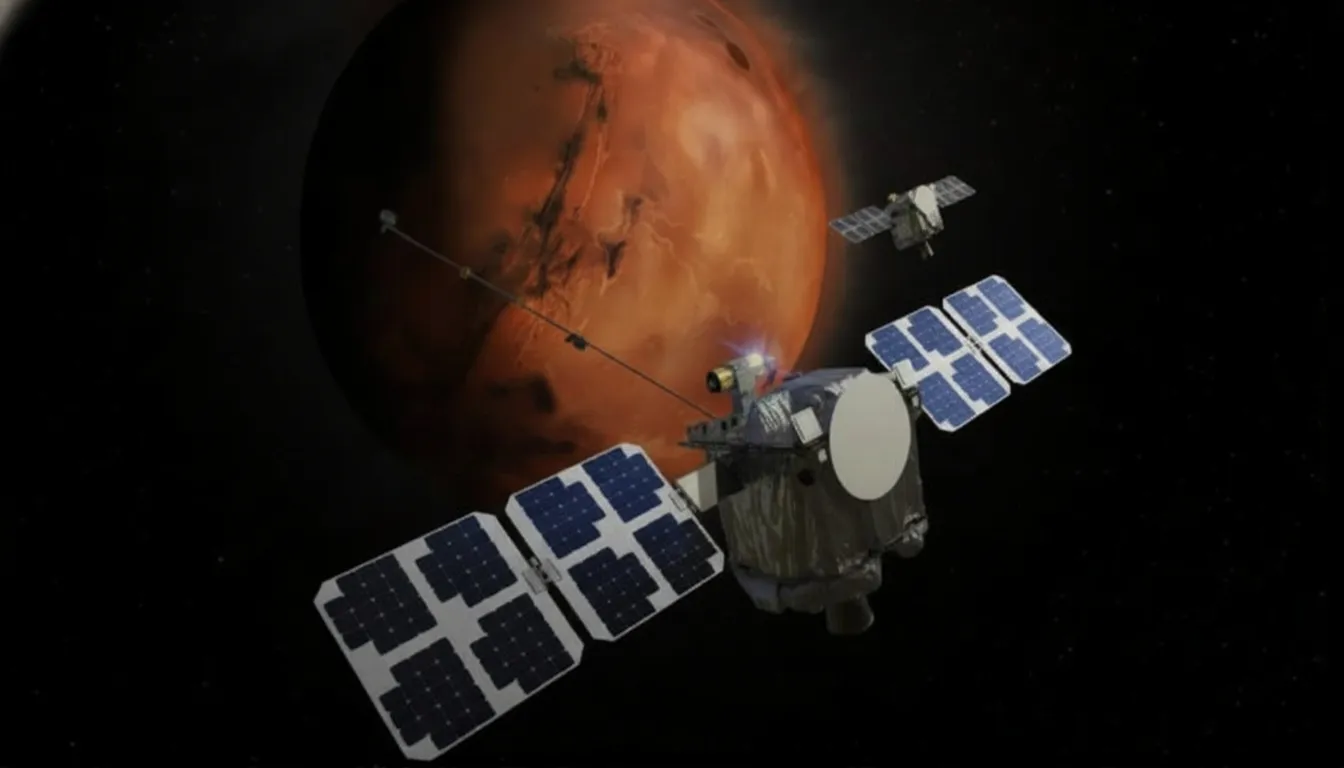
ESCAPADE Gold (SIMPLEx-4B) is one of the two twin spacecraft of NASA's ESCAPADE mission designed to jointly investigate Mars' three-dimensional magnetosphere and the loss of its atmosphere to the solar wind. Launched on November 13, 2025, via a New Glenn rocket, it is currently in interplanetary transit with an expected arrival at Mars in September 2027.

Orbiter
En route
NASA

ESCAPADE Blue (SIMPLEx-4A)

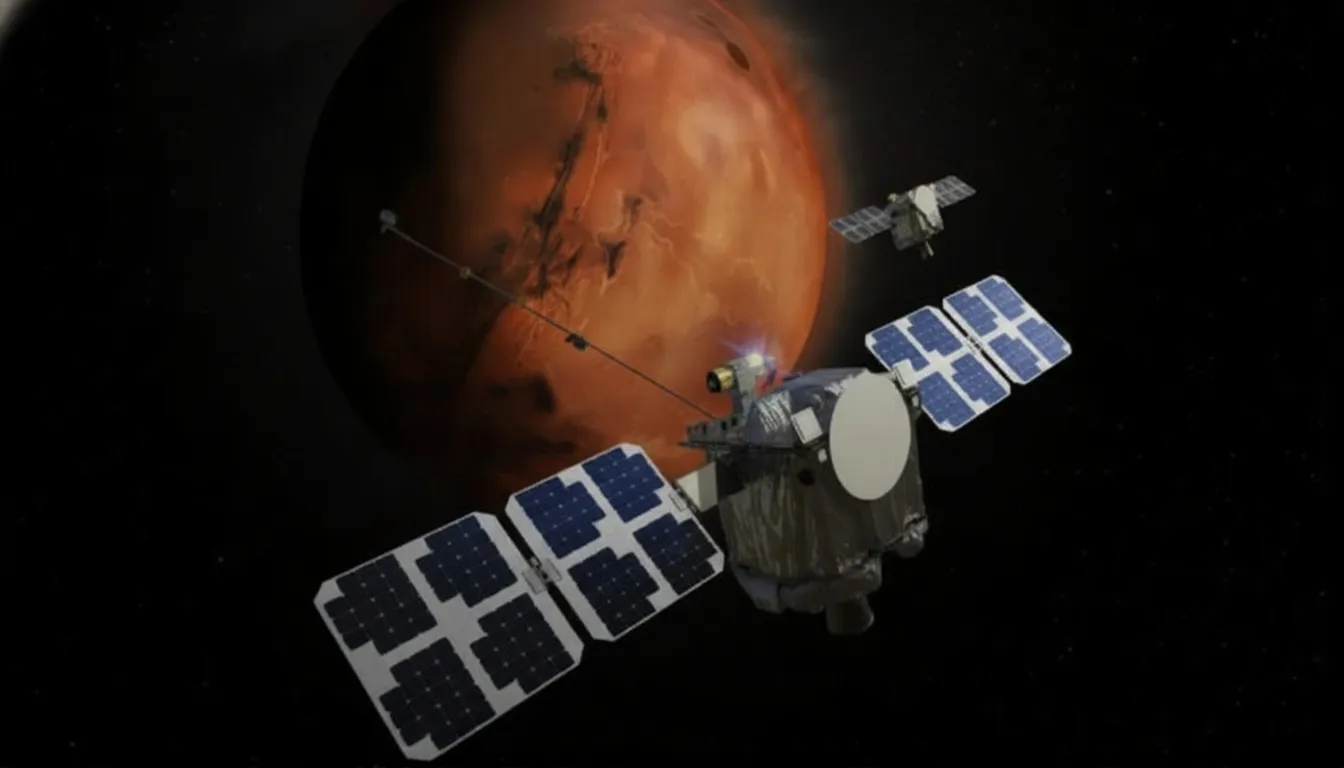
The ESCAPADE Blue mission (SIMPLEx-4A), developed by NASA and UC Berkeley alongside industrial partners, is part of a pair of twin spacecraft designed to study Mars' hybrid magnetosphere in stereo for the first time. Launched in November 2025, it is currently in its cruise phase toward the red planet to quantify atmospheric loss processes.

Orbiter
Operating in orbit
CNSA

Tianwen-1 (Orbiter)

Part of Zhurong

Tianwen-1 is China's first comprehensive interplanetary mission to Mars, consisting of an orbiter, a lander, and the Zhurong rover. Launched in July 2020, it reached Martian orbit in February 2021 and successfully delivered its payload to Utopia Planitia. The orbiter continues to gather advanced geological, atmospheric, and mineralogical data.

Orbiter
Operating · extended mission
UAESA

Hope (Al Amal)

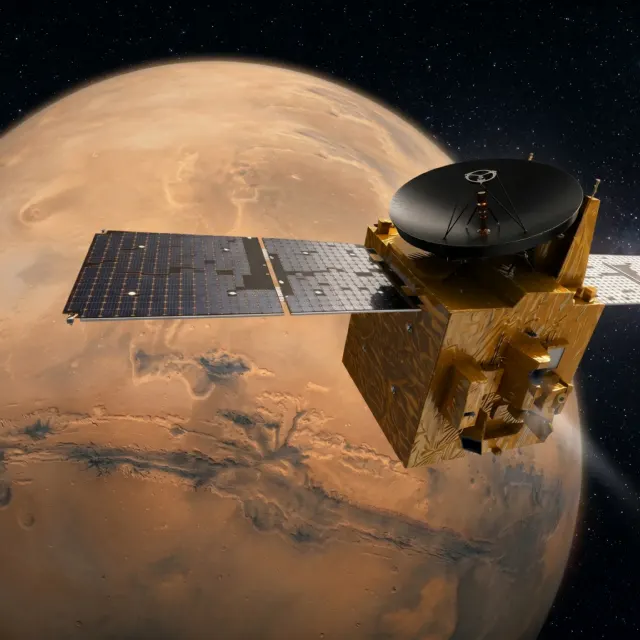
The UAESA Hope probe revolutionized Martian meteorology through a high elliptical orbit that enabled continuous modeling of the global atmosphere across all local time zones. Its key achievements include discovering the sinuous discrete aurora, patchy proton aurora, confirming Deimos's planetary basaltic origin, and intercepting the interstellar comet 3I/ATLAS.

Orbiter
Operating in orbit
ESA

ExoMars Trace Gas Orbiter (TGO)

ExoMars Trace Gas Orbiter (TGO), launched in March 2016 by ESA and Roscosmos, is an orbital mission dedicated to studying the Martian atmosphere and searching for trace gases such as methane. Following a long aerobraking process, it began its scientific phase in April 2018 and remains operational, combining atmospheric research with its work as a communications relay.

Orbiter
Completed · full success
NASA

MAVEN

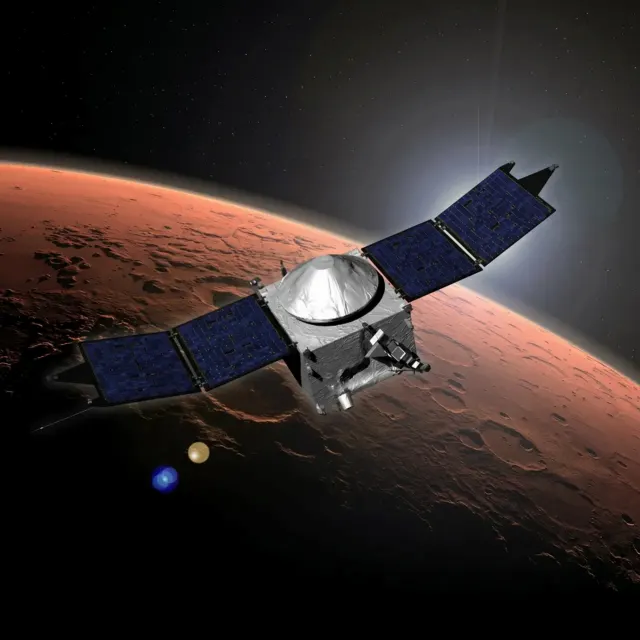
MAVEN concluded its mission on June 3, 2026. Over 11 years, it quantified Martian atmospheric erosion, establishing that 66% of primordial argon was lost via sputtering. Despite the loss of control in December 2025, its scientific and operational legacy for the rovers is fundamental.

Orbiter
Failed · launch failure
CNSA

Yinghuo-1 (YH-1)

The Yinghuo-1 mission was the CNSA's first attempt to send a microsatellite orbiter to the Martian environment. Launched on November 8, 2011, as a secondary payload of the Russian Phobos-Grunt spacecraft, the assembly became stranded in low Earth orbit after the cruise burn failed. The mission formally concluded with its destructive reentry over the Pacific on January 15, 2012.

Orbiter
Operating in orbit
NASA

Mars Reconnaissance Orbiter (MRO)

NASA's MRO mission, launched in 2005, has successfully operated for over 15 years. Using instruments like HiRISE and SHARAD, it has discovered vast subsurface ice deposits at mid-latitudes and serves as the primary communications relay for surface rovers.

Orbiter
Operating in orbit
ESA

Mars Express

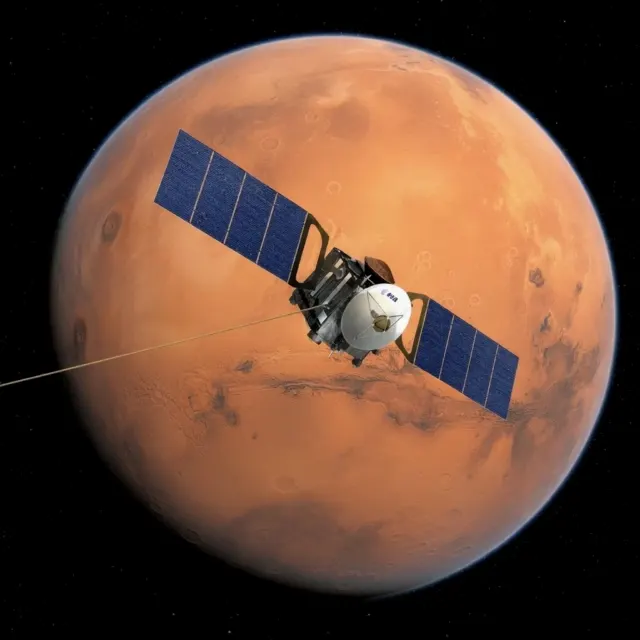
Launched in 2003 aboard a Soyuz-Fregat, Mars Express is ESA's first planetary mission. The orbiter achieved a successful insertion and has operated for over two decades. It has revolutionized our understanding of Mars by confirming subsurface water ice, detecting methane, and mapping hydrated minerals that prove a habitable past.

Orbiter
Operating · extended mission
NASA

2001 Mars Odyssey

The 2001 Mars Odyssey mission (NASA) is a Mars orbiter designed to map the elemental and mineralogical composition of the surface, search for water ice, and act as a communications relay. Launched in April 2001, it confirmed the presence of vast underground ice deposits and remains active after multiple extensions.

Orbiter
Failed · orbital failure
NASA

Mars Climate Orbiter (Mars Surveyor '98 Orbiter)

NASA's Mars Climate Orbiter was an orbiter designed to study the climate and atmosphere of Mars and act as a communications relay. The mission failed on September 23, 1999, during orbital insertion due to a navigation error caused by a discrepancy in metric and imperial units, leading to its destruction in the Martian atmosphere.

Orbiter
Failed · orbital failure
JAXA

Nozomi (PLANET-B)

Nozomi (PLANET-B), launched on July 3, 1998, by ISAS (predecessor of JAXA), was Japan's first interplanetary mission aimed at studying Mars' upper atmosphere and its interaction with the solar wind. After suffering severe setbacks during gravity assists and solar flares in its prolonged cruise, the spacecraft was unable to perform the orbit insertion, completing a distant flyby before formally ending its mission on December 31, 2003, in heliocentric orbit.

Orbiter