
Mars exploration database

All Missions

Every mission ever sent to the Red Planet: orbiters, landers, rovers and the helicopter that flew. Filter, explore the chronology and open each file.

64MissionsLaunched
8ActiveWorking now
50%Success rateReached their goal
7Rovers
13Landers
30Orbiters
1Helicopters

Chronology of Mars exploration

Drag, scroll or use the arrows. The bars show how many missions launched each year: they cluster around the launch windows that open every 26 months.

ActiveCompletedFailedUpcoming
More filters

Showing 5 of 5 missions

Clear filters
En route
NASA

ESCAPADE Gold (SIMPLEx-4B)

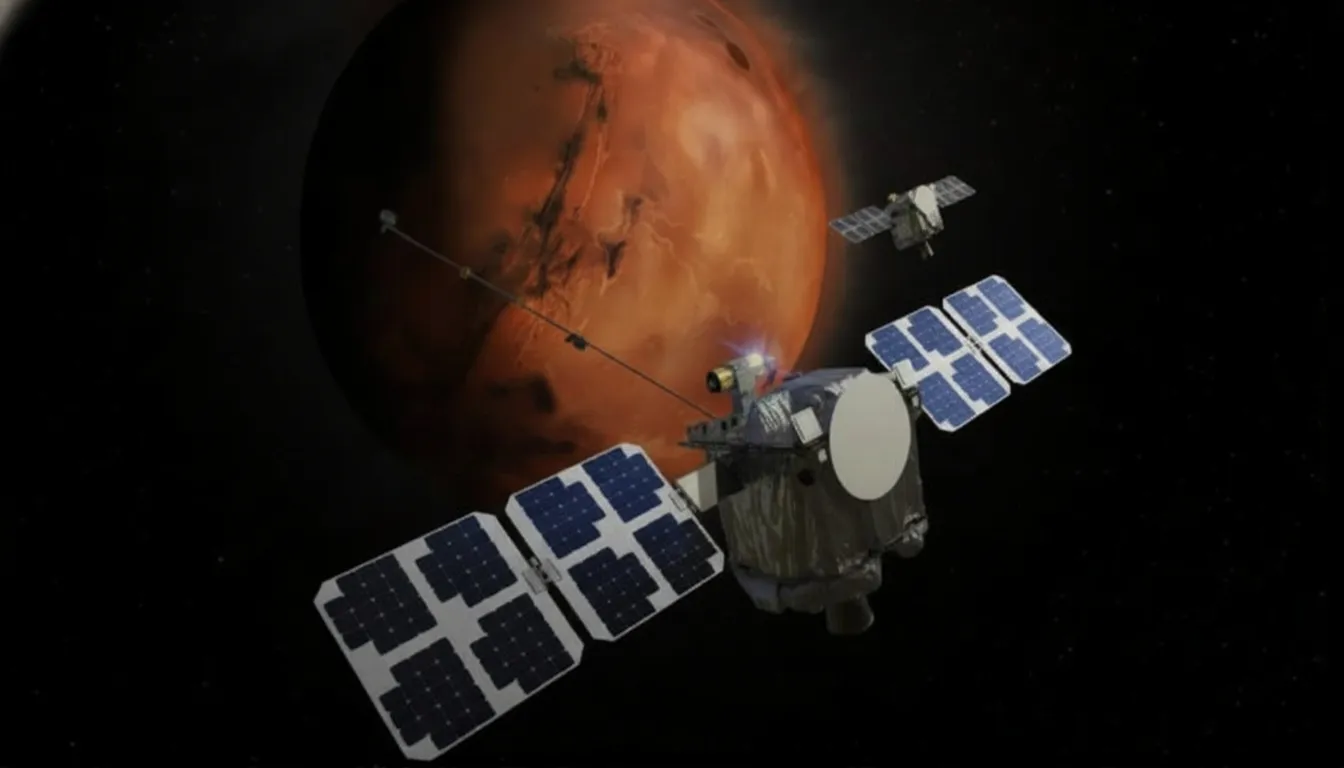
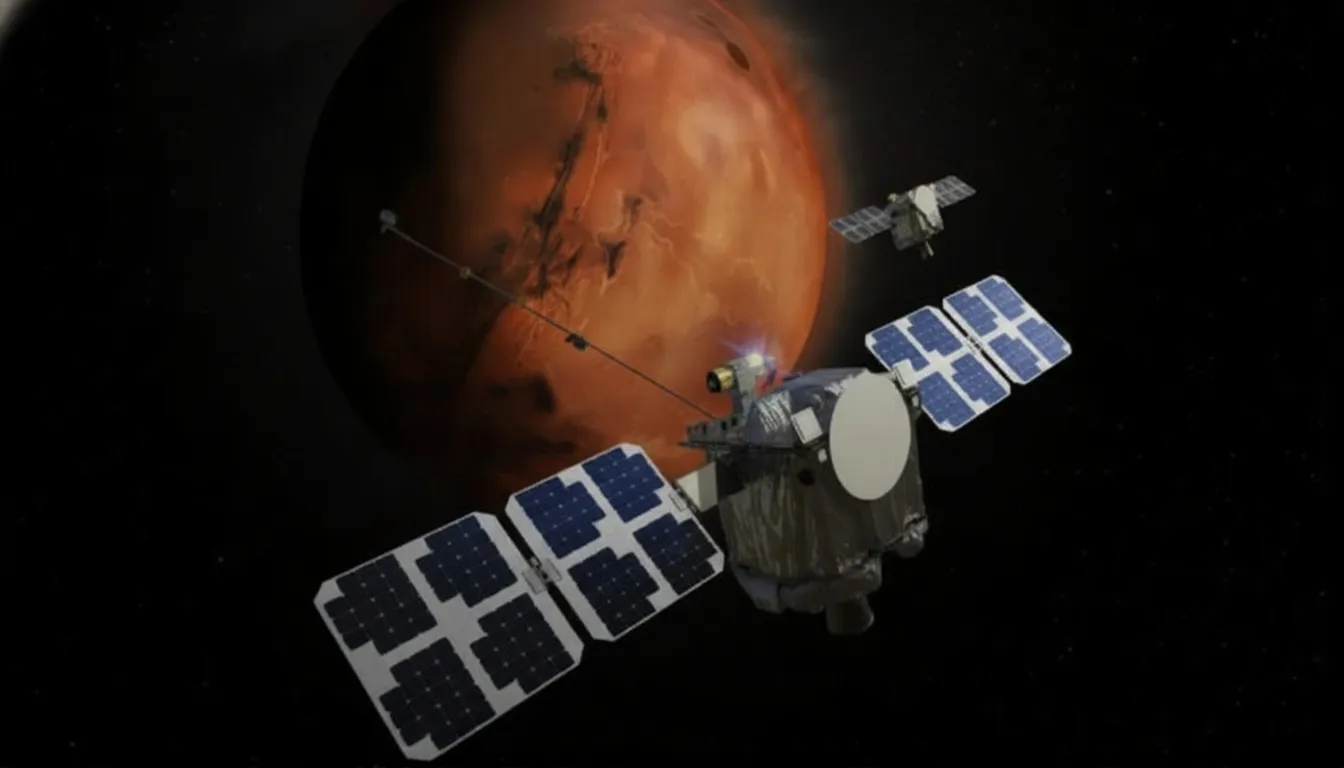
ESCAPADE Gold (SIMPLEx-4B) is one of the two twin spacecraft of NASA's ESCAPADE mission designed to jointly investigate Mars' three-dimensional magnetosphere and the loss of its atmosphere to the solar wind. Launched on November 13, 2025, via a New Glenn rocket, it is currently in interplanetary transit with an expected arrival at Mars in September 2027.

Orbiter
En route
NASA

ESCAPADE Blue (SIMPLEx-4A)

The ESCAPADE Blue mission (SIMPLEx-4A), developed by NASA and UC Berkeley alongside industrial partners, is part of a pair of twin spacecraft designed to study Mars' hybrid magnetosphere in stereo for the first time. Launched in November 2025, it is currently in its cruise phase toward the red planet to quantify atmospheric loss processes.

Orbiter
En route
NASA

Europa Clipper

NASA's Europa Clipper mission, launched in October 2024 aboard a Falcon Heavy rocket, is currently in its interplanetary cruise phase heading toward the Jupiter system. After successfully completing a gravity assist and calibration flyby of Mars in February 2025, the spacecraft is headed toward an upcoming Earth gravity assist maneuver. Its primary goal upon arriving at Jupiter will be to assess the habitability of the moon Europa through multiple scientific flybys.

Flyby
Planned
NASA

Aeolus

The Aeolus orbital mission (2028), structured through a public-private partnership between NASA and Relativity Space under a Space Act Agreement, will deploy the innovative DWTS radiometer to continuously map Mars' winds and three-dimensional thermal profiles. Utilizing the Terran R heavy launcher and an onboard AI data center, this meteorological mission will mitigate atmospheric density risks for future crewed landing systems following the loss of the MAVEN probe.

Orbiter
Planned
ESA

ExoMars Rosalind Franklin Rover (EXM-RFM)

The ExoMars Rosalind Franklin mission is an ESA-led initiative, with NASA participation, whose main objective is to search for signs of past or present life on Mars. The rover features a drilling system capable of reaching a depth of 2 meters to extract samples protected from ionizing radiation. Its launch is scheduled for October 2028 aboard a Falcon Heavy rocket, with a planned landing in Oxia Planum.

Rover