
Mars exploration database

All Missions

Every mission ever sent to the Red Planet: orbiters, landers, rovers and the helicopter that flew. Filter, explore the chronology and open each file.

64MissionsLaunched
8ActiveWorking now
50%Success rateReached their goal
7Rovers
13Landers
30Orbiters
1Helicopters

Chronology of Mars exploration

Drag, scroll or use the arrows. The bars show how many missions launched each year: they cluster around the launch windows that open every 26 months.

ActiveCompletedFailedUpcoming
More filters

Showing 12 of 25 missions

Clear filters
Completed · full success
ESA

Hera

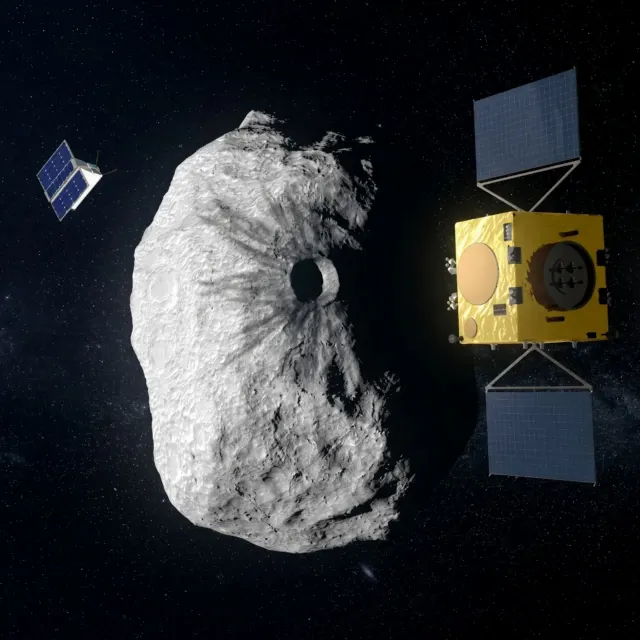
The Hera probe successfully completed its Mars and Deimos flyby on March 12, 2025, using gravity assist to optimize its route to Didymos. The deep-space campaign validated its optical, hyperspectral, and thermal sensors through unprecedented analysis of the far side of Deimos.

Flyby
Completed · full success
NASA

Psyche

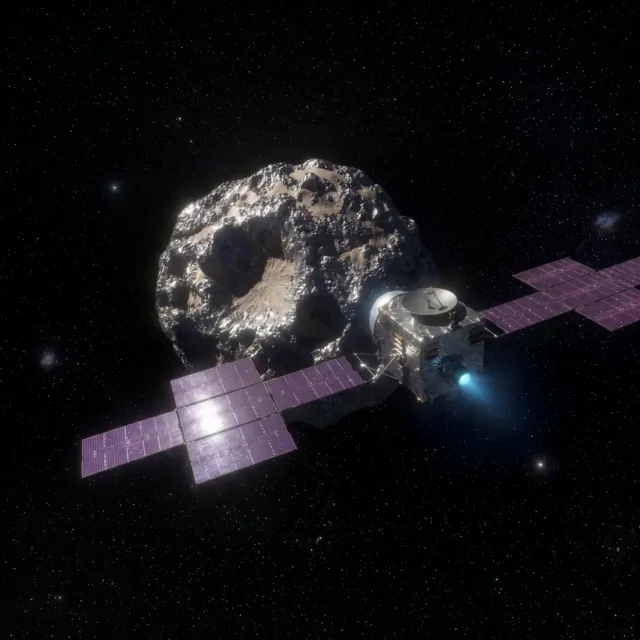
NASA's Psyche spacecraft successfully completed its hyperbolic Mars flyby at an altitude of 4,609 km, utilizing gravity assist to correct its orbital plane and gain 447 m/s in velocity. The maneuver overcame a propulsion xenon line anomaly and provided high-precision calibration for its science payload.

Flyby
Completed · full success
NASA

Ingenuity

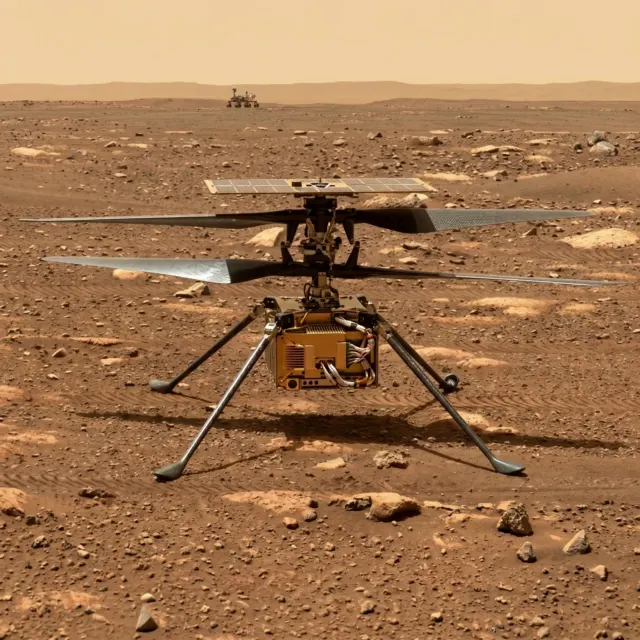
The Ingenuity helicopter validated controlled flight in the thin Martian atmosphere by completing 72 autonomous missions over three years. Its visual-inertial navigation system suffered a fatal loss of optical flow over uniform dunes during Flight 72, causing horizontal drift and a terminal impact that fractured its rotors.

Helicopter
Completed · full success
CNSA

Tianwen-1 (Lander)

Part of Zhurong

The CNSA's Tianwen-1 mission marked China's first successful landing on the Martian surface with a lander and the Zhurong rover in Utopia Planitia. After exceeding its designed lifespan and completing its scientific objectives on geology and the subsurface, the primary surface mission concluded successfully.

Lander
Completed · full success
NASA

InSight (Interior Exploration using Seismic Investigations, Geodesy and Heat Transport)

InSight was a NASA stationary lander designed to investigate the deep interior and internal structure of Mars. Launched in May 2018, it deployed seismological and thermal instruments in Elysium Planitia, successfully mapping the planet's crust, mantle, and core for the first time. The mission concluded in December 2022 after its power was depleted due to dust accumulation.

Lander
Completed · full success
NASA

MAVEN

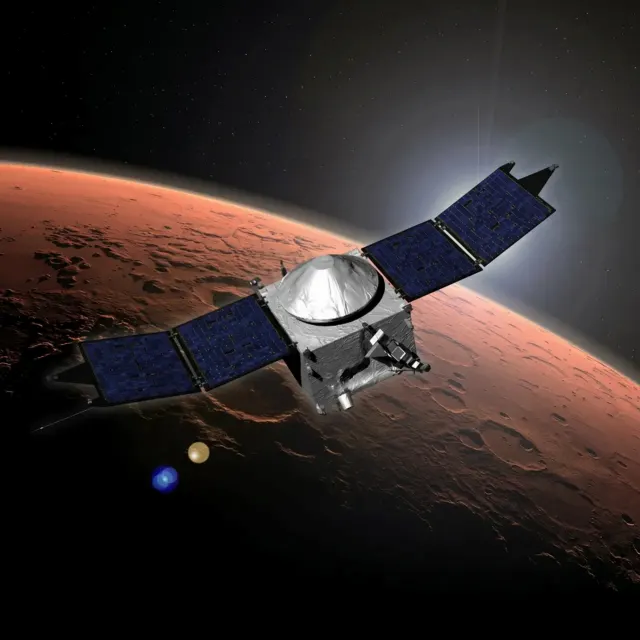
MAVEN concluded its mission on June 3, 2026. Over 11 years, it quantified Martian atmospheric erosion, establishing that 66% of primordial argon was lost via sputtering. Despite the loss of control in December 2025, its scientific and operational legacy for the rovers is fundamental.

Orbiter
Completed · full success
NASA

Dawn

NASA's Dawn mission used a gravity assist flyby of Mars in February 2009 to modify its trajectory toward the asteroids Vesta and Ceres. After completing its primary objectives in the main belt, the mission concluded in November 2018 due to propellant exhaustion.

Flyby
Completed · full success
NASA

Phoenix (Mars Phoenix Lander)

Phoenix, launched by NASA in August 2007, was the first mission to successfully land on the arctic polar plains of Mars. It touched down in Vastitas Borealis in May 2008, confirming the presence of subsurface water ice and detecting perchlorates in the regolith during its extended mission before ceasing operations in November 2008.

Lander
Completed · full success
ESA

Rosetta

In February 2007, the European Space Agency's (ESA) Rosetta mission performed a gravity-assist flyby of Mars to modify its trajectory toward comet 67P/Churyumov-Gerasimenko. During the close encounter, the spacecraft analyzed the Martian atmosphere and captured high-resolution images before continuing its journey toward its main destination in deep space.

Flyby
Completed · full success
NASA

Opportunity

Launched on a Delta II Heavy in 2003, Opportunity (MER-B) landed on Meridiani Planum, Mars, in January 2004. Designed for 90 days, it operated for nearly 15 years, traversing 45.16 km (a record). It confirmed past liquid acidic water by discovering hematite and jarosite. A global dust storm in 2018 depleted its batteries, ending the mission in 2019.

Rover
Completed · full success
NASA

Mars Exploration Rover A (Spirit)

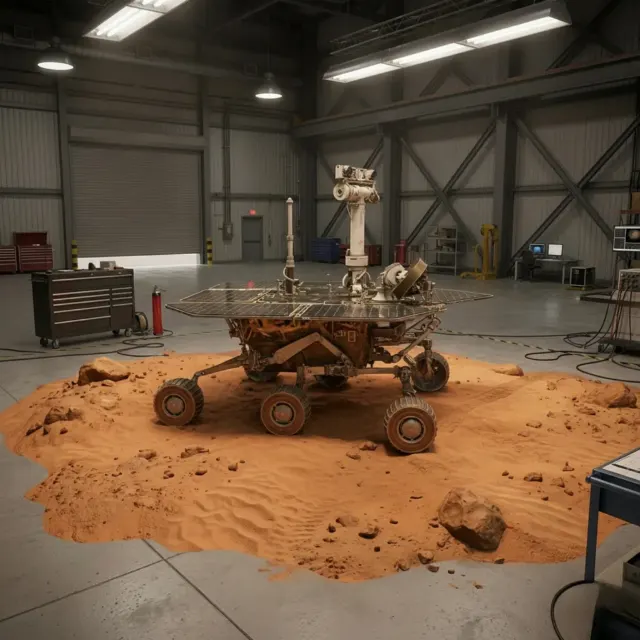
Spirit (MER-A) was one of two twin rovers sent by NASA in 2003 to explore the Martian surface. It landed in Gusev crater in January 2004, vastly exceeding its nominal lifespan of 90 sols and confirming a watery past in the region. After becoming immobilized in a sand trap in 2009, the last communication was received in March 2010 and the mission was officially concluded in 2011.

Rover
Completed · full success
NASA

Mars Pathfinder

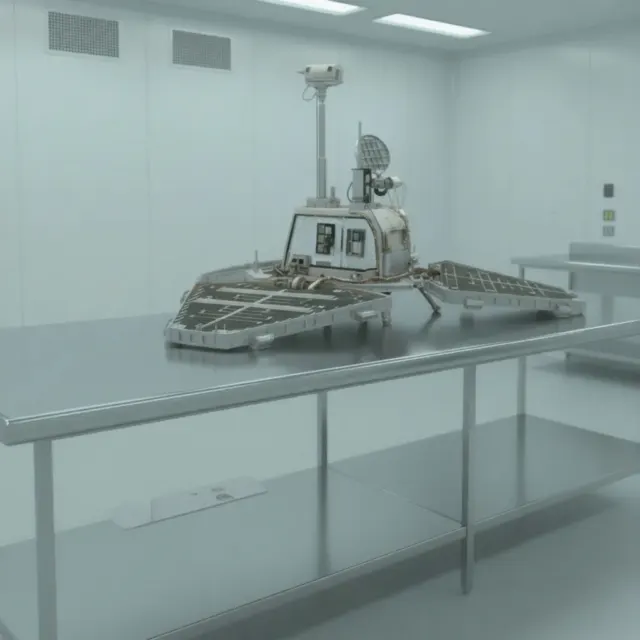
Launched in 1996, Mars Pathfinder was the first completed mission under NASA's "faster, better, cheaper" philosophy. It pioneered the use of an airbag landing system and successfully deployed the first rover on Mars, Sojourner. The mission landed in Ares Vallis, returned over 17,000 images, and performed in-situ chemical analysis of rocks and soil, far exceeding its expected operational lifespan.

Lander