
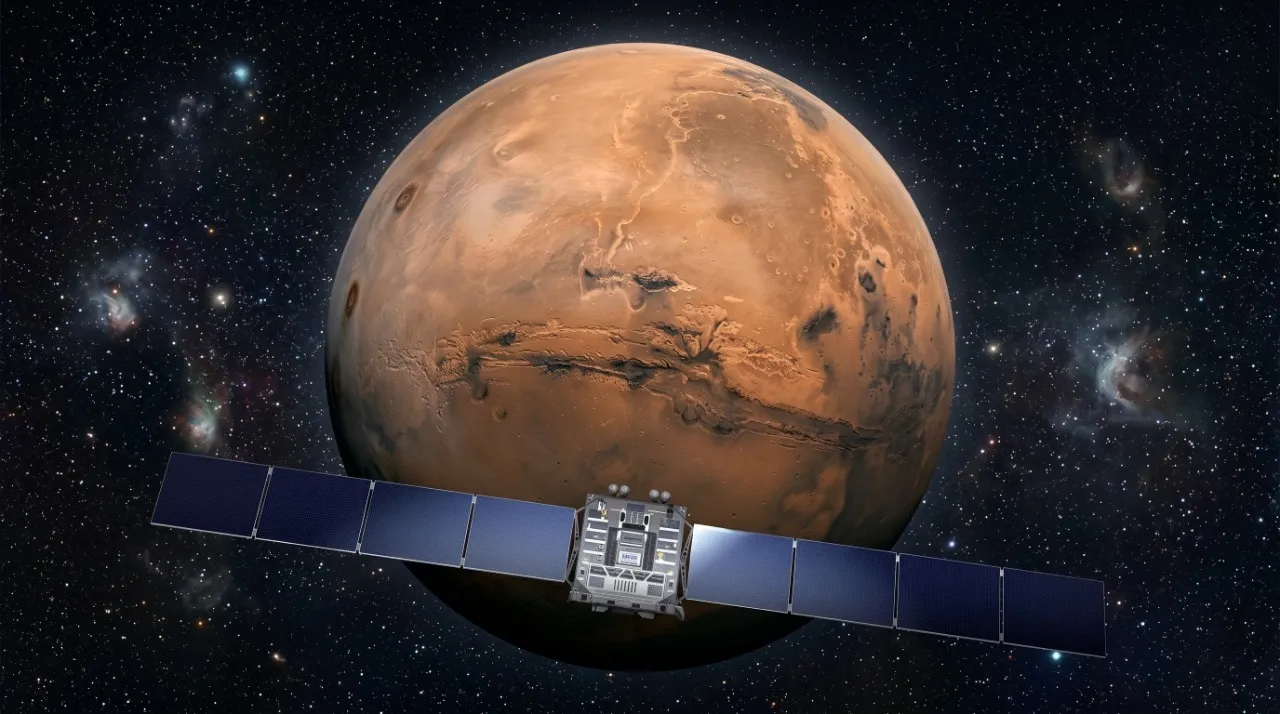
The architecture of space exploration is undergoing a profound transition toward a model of commercial integration and hybrid financing. This restructuring has significantly accelerated following the confirmation of Jared Taylor Isaacman as the fifteenth NASA Administrator. Isaacman —a billionaire entrepreneur and military jet pilot qualified in various tactical platforms who took office on December 18, 2025— will bring a direct operational perspective as a commercial astronaut having commanded the historic Polaris Dawn mission. His long-range technological vision is complemented by strong support for advanced and disruptive propulsion concepts. This institutional reorientation is part of a broader policy shift in United States space governance. Curiously, this ecosystem of regulatory flexibility has already facilitated historic agreements for private misiones and crewed flights toward the Haven-1 commercial outpost. In this new atmosphere of decentralization, NASA announced on June 17, 2026, its strategic alliance with the firm Relativity Space for the development and launch of the Aeolus mission in 2028, formally extending the commercial interplanetary services model into deep space.
The challenge of the Martian atmosphere and the operational vacuum
The comprehensive and continuous characterization of the atmosphere of Mars represents one of the most complex and urgent challenges for the viability of long-range crewed exploration. The fundamental objective of the Aeolus mission consists of obtaining the first global, integrated, and daily meteorological database of Martian winds, temperatures, dust storms, and clouds simultaneously. The operational outlook became highly critical at the end of 2025, when NASA officially declared the conclusion of the MAVEN mission following a catastrophic anomaly on December 6 that caused a total loss of communications. Approaching high-resolution atmospheric data is a prerequisite to mitigate the extreme risks associated with the entry, descent, and landing phases of heavy-tonnage spacecraft. The Martian atmosphere presents a physical paradox: it is dense enough to induce severe aerodynamic heating, but it is too thin to allow effective braking through the exclusive use of traditional parachutes. This condition is like trying to stop a speeding truck using a silk sheet as a parachute; exact knowledge of the terrain is required so as not to lose control. Additionally, Mars experiences local dust storms that can rapidly evolve into global events enveloping the planet for months, altering descent trajectories.
An unprecedented interplanetary business model
The alliance for the Aeolus mission has been structured under a pioneering public-private partnership model utilizing a six-year Reimbursable Space Act Agreement. According to this model, NASA assumes total responsibility for the development, calibration, and integration of the advanced atmospheric instrument suite through the Ames Research Center. For its part, the company Relativity Space will independently supply the heavy-lift launch vehicle, design and build the physical platform of the spacecraft, and assume full operational responsibility. A unique element of this alliance is that Relativity Space will privately finance the development of the orbiter through an undisclosed philanthropic sponsor, opening the door to a new paradigm of scientific patronage. This commercial model is inextricably linked to the corporate leadership of Eric Schmidt, former executive chairman of Google, who took over as chief executive officer of Relativity Space in March 2025. Schmidt has oriented the company's strategic vision toward the creation of advanced space infrastructure and massive orbital data centers, arguing that access to space must become a standardized cloud computing service with high-speed redundant communications.
The engineering of the Terran R and hybrid manufacturing
The execution of the Aeolus mission in the 2028 launch window depends on the successful development of the heavy-lift rocket Terran R. Its precursor, the Terran 1, became the first structure built largely through 3D printing and made its only flight on March 23, 2023. Although the rocket successfully overcame the phase of maximum dynamic pressure and surpassed the Kármán line, the mission failed to reach orbit because the main valves of the second-stage engine opened slower than anticipated. Following this anomaly, the company concentrated its capabilities on the development of the Terran R. This vector is conceived as a direct competitor in the heavy launch market and its first stage will be powered by thirteen Aeon R engines burning methane and subcooled liquid oxygen. To respond to pressing market demand, Relativity Space modified the constructive approach. Instead of printing the entire fuselage, the first versions will employ a hybrid manufacturing approach: the cylindrical propellant tanks are manufactured using traditional processes, reserving the use of the gigantic fourth-generation Stargate metal additive printers for complex thrust transition structures and internal subsystems. This technique works just like building a modern house; standard prefabricated blocks are used for the smooth walls but a specialized architect is called upon to shape the more complex support pillars.
Scientific innovation in the payload and the DWTS sensor
The scientific success of the Aeolus mission lies in its atmospheric instrument payload coordinated by NASA Ames, highlighting the Doppler Wind and Temperature Sounder or DWTS-Ozone. Developed by Global Atmospheric Technologies and Sciences, this instrument has the capacity to perform direct and simultaneous measurements of the horizontal wind vector and kinetic temperature from the surface up to altitudes of approximately 60 kilometers. Its technique is based on Gas Filter Correlation Radiometry, utilizing static cells containing specific gaseous compounds that act as a selective scanning spectral filter. To achieve the required level of sensitivity, the sensor array of the infrared camera's focal plane is actively maintained at a cryogenic temperature of 80 Kelvin via a Stirling cycle cooler. The development of this sensor has been the result of a technology validation roadmap on Earth that included the TES-16 and TES-17 CubeSat missions. The scientific suite is complemented by the Thermal Limb Sounder for high-resolution vertical scans, the Surface Radiometric Sensor Package to evaluate the net radiation balance of the surface, and the Wide-Field Context Camera, a wide-angle meteorological camera that captures complete images of the visible disk of the planet on a daily basis.
Orbital redundancy and the shadow of commercial risk
The space platform will incorporate operational redundancy systems and commercial hardware architectures of high data processing capacity through the so-called Relay Data Center. This integrated processing system with high-performance computing servers will execute onboard artificial intelligence algorithms to automate data compression. Likewise, the probe will integrate a subsurface synthetic aperture radar to map water ice deposits. Curiously, deploying radar antennas in Martian orbit is one of the highest-risk maneuvers in aerospace engineering; in 2005, the MARSIS radar on the Mars Express probe experienced a critical failure due to thermal hardening of its components from extreme cold, resolved only after orienting the orbiter toward the sun to induce controlled thermal expansion. To avoid analogous incidents, Relativity Space will incorporate advanced shape-memory materials and active heating systems. However, the model introduces questions about technological risk management and space infrastructure sovereignty. NASA has entrusted the transport of a priority payload to a launcher in development whose inaugural flight has not yet taken place, which reduces the certification margin for the rigorous 2028 launch window. Any minor delay will force the postponement of the Aeolus mission until the 2030 or 2031 window due to the laws of orbital mechanics, altering long-term plans.
Governance and geopolitics of deep space
The operational governance of a privately owned communications orbiter on Mars introduces significant regulatory challenges regarding the sovereignty of telecommunication links and the financial vulnerability of aerospace startups. A model in which the retransmission of critical meteorological data for human missions is privatized hands immense strategic leverage to a single commercial provider. Furthermore, this alliance establishes an intense commercial and technological rivalry between Eric Schmidt and Elon Musk. Although SpaceX maintains the development of its Starship system, it has not sent dedicated robotic or scientific missions to the orbit of the red planet. If Relativity Space's platform driven by Schmidt successfully completes the journey and deploys the Aeolus orbiter in the 2028 launch window, it will claim the achievement of leading the first private mission to reach the planet Mars in human history. Space progress is slow, costly, and eminently bureaucratic, but the steps being taken on this interplanetary chessboard promise to change the rules of the game in the solar system forever.
Related
Missions
- 🛰️ Mars Express
- 🛰️ MAVEN
- 🛰️ Aeolus
- 🛰️ Dawn
Related news and articles
- 📄 The Mars Farming Challenge: Why Space Agriculture Is More Complex Than Science Fiction 25 JUL 2026
- 📰 Perseverance's Martian Marathon and the Silent Revolution of Autonomous Artificial Intelligence 20 JUN 2026
- 📄 The Biological Price of Colonizing Mars: Can the Human Body Survive Partial Gravity? 13 JUN 2026
- 📄 Valles Marineris: The Tectonic Scar That Rewrote the History of Mars 11 JUN 2026
Marspedia terms
Enjoyed it? Keep exploring
Back to all news