Curiosity (MSL)
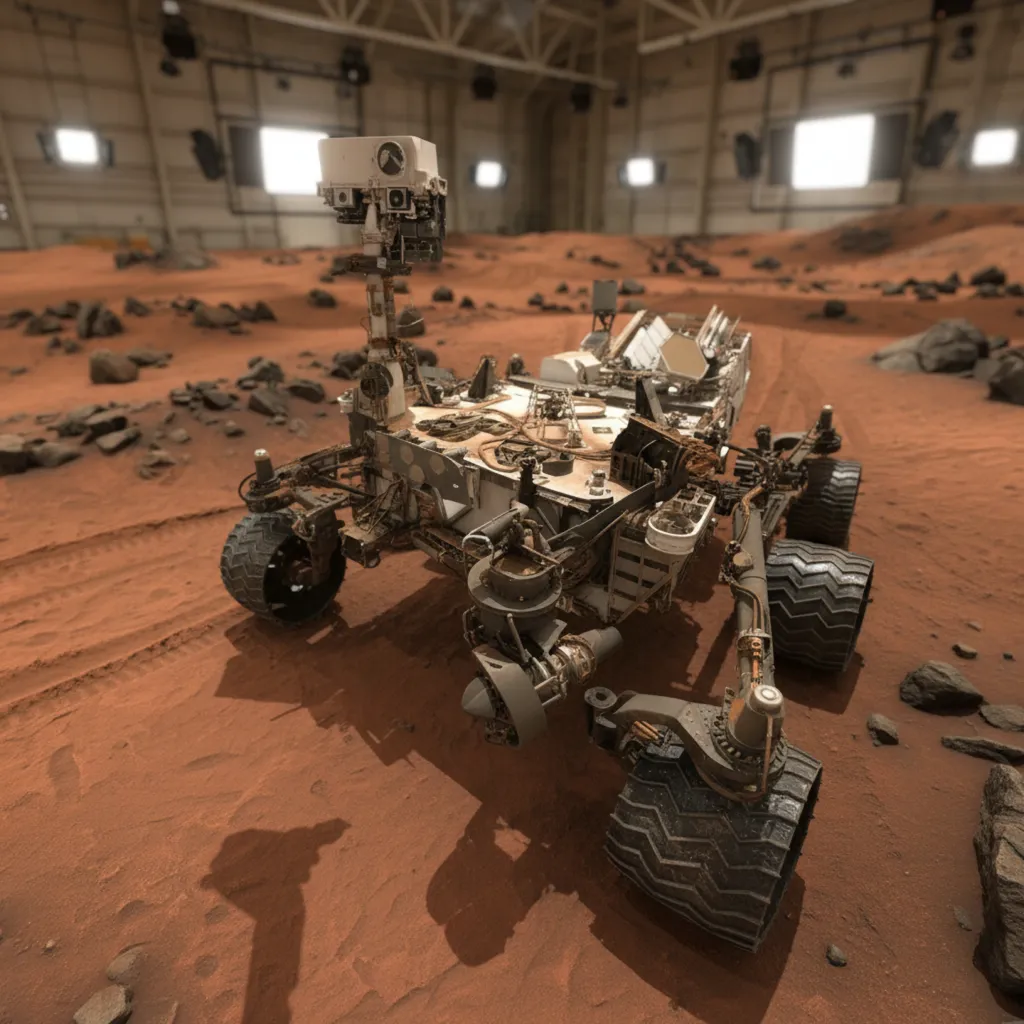
Launched in 2011, the Curiosity (MSL) mission revolutionized Martian exploration by using the "Sky Crane" landing system to deposit a 900 kg nuclear-powered rover in Gale Crater in 2012. The mission confirmed that Mars once hosted ancient freshwater lakes and complex organic molecules, validating that the planet held habitable conditions in the past. It remains operational after more than 12 years.
Agency

Country

Type
Rover
Status
Launch
November 26, 2011
Technical Analysis of the Mars Science Laboratory Mission (Curiosity Rover)
- Mission Designation: Mars Science Laboratory (MSL)
- Rover Name: Curiosity
- Operating Agency: NASA (Managed by Jet Propulsion Laboratory - JPL)
- Launch Date: November 26, 2011
- Landing Date: August 6, 2012
- Landing Site: Gale Crater (Aeolis Palus)
- Launch Vehicle: Atlas V 541 (AV-028)
- Mission Status: Active (Surface Operations)
1. Mission Objectives
The fundamental objective of the MSL mission was to determine if Mars was ever capable of supporting microbial life. Unlike its predecessors (MER), which sought evidence of water, Curiosity was designed as a mobile geochemical laboratory to assess planetary habitability.
Specific Scientific Objectives:
- Biological Assessment: Inventory the basic chemical building blocks of life (carbon, hydrogen, nitrogen, oxygen, phosphorus, and sulfur) and identify potential biosignatures.
- Geology and Geochemistry: Investigate the chemical, isotopic, and mineralogical composition of the surface and near-subsurface.
- Planetary Processes: Assess the long-term evolution of the Martian atmosphere and determine the current state of water and carbon dioxide cycles.
- Surface Radiation: Characterize the surface radiation spectrum, including galactic cosmic rays and solar particle events, a critical dataset for future human missions.
2. Probe Specifications (Curiosity Rover)
Curiosity represented a paradigm shift in size and power capability compared to previous rovers.
- Total Launch Mass: 3,893 kg (including cruise stage and descent system).
- Rover Mass: 899 kg.
- Dimensions: 3.0 m long, 2.7 m wide, and 2.2 m high.
- Power Source: Multi-Mission Radioisotope Thermoelectric Generator (MMRTG). Uses 4.8 kg of plutonium-238 dioxide to generate approximately 110 watts of continuous electrical power at mission start, regardless of sunlight.
- Mobility: Six-wheel "rocker-bogie" suspension system (50 cm wheel diameter), with independent steering motors on the four corner wheels, allowing for 360-degree in-situ turns.
- Communications: X-Band transmitters for Direct-to-Earth (DTE) communication and UHF transceivers for linking with orbiters (Odyssey, MRO) acting as data relays.
3. Scientific Instrumentation
The rover carries the most advanced scientific payload sent to the Martian surface to date (approx. 75 kg):
- Mastcam: Primary camera system for stereoscopic imaging and color video.
- ChemCam (Chemistry and Camera): A Laser-Induced Breakdown Spectroscopy (LIBS) instrument that vaporizes rocks from a distance (up to 7 m) to analyze their elemental composition.
- SAM (Sample Analysis at Mars): An internal analytical laboratory (half the science payload) comprising a gas chromatograph, mass spectrometer, and tunable laser spectrometer to search for organic compounds.
- CheMin (Chemistry and Mineralogy): X-ray diffraction instrument to identify and quantify minerals.
- APXS (Alpha Particle X-ray Spectrometer): Mounted on the robotic arm to determine contact elemental composition.
- MAHLI (Mars Hand Lens Imager): Variable focus camera on the robotic arm for microscopic imaging.
- RAD (Radiation Assessment Detector): High-energy radiation monitor.
- REMS, DAN, MARDI: Weather station (Spain), neutron albedo detector (Russia), and descent imager.
4. Mission Profile and Landing System (EDL)
Due to the rover's large mass, the airbag systems used on Pathfinder and MER were ruled out. A new Entry, Descent, and Landing (EDL) architecture known as "Sky Crane" was developed.
- Launch: An Atlas V rocket in 541 configuration (5m fairing, 4 solid boosters, 1 Centaur engine) injected the spacecraft into a Hohmann transfer trajectory.
- Guided Entry: The capsule used small thrusters to adjust its angle of attack and generate lift, allowing for a precision landing within a reduced ellipse (20x7 km).
- Descent: Deployment of a supersonic parachute at Mach 2.0. Subsequently, heat shield separation and descent radar activation.
- Sky Crane Maneuver: At 1.8 km altitude, the descent stage separated from the parachute. Eight retrorocket engines slowed the fall. At 20 meters altitude, the rover was lowered via nylon tethers (bridle) from the descent stage. Once the wheels touched the ground (confirmed by weight off-loading), the cables were pyrotechnically cut, and the descent stage flew away to crash at a safe distance.
5. Main Results and Current Status
Curiosity successfully landed on August 6, 2012, and continues to operate far beyond its primary mission of one Martian year.
- Ancient Habitability: In the "Yellowknife Bay" area, Curiosity discovered an ancient lake bed with neutral pH fresh water, containing all key chemical ingredients for life (C, H, N, O, P, S).
- Organic Matter: The SAM instrument detected complex organic molecules (thiophenes, benzene, toluene) preserved in 3.5 billion-year-old mudstones.
- Atmospheric Methane: Detected seasonal variations in background methane levels and unexplained transient spikes, suggesting active processes (biological or geological) in the subsurface.
- Recent Discoveries (2024): The rover has reached the Gediz Vallis channel and discovered pure elemental sulfur crystals, an unprecedented find for the mission.
6. Technical Conclusion
The Mars Science Laboratory mission has been a resounding engineering and scientific success. It validated the complex Sky Crane landing architecture, necessary for future heavy missions (such as Mars 2020), and affirmatively answered the question of Martian habitability. The use of nuclear power (MMRTG) has allowed for continuous operability for over a decade, overcoming the dust degradation that affects solar rovers.
Mission Milestones
Launch
Sol 36 of Curioso, Year 31
254 days
of travel
Arrival at Mars
Sol 23 of Luno, Year 31
Operations Start
Sol 23 of Luno, Year 31
4867 sols
of operations so far