
The new space geopolitical chessboard and a reality check
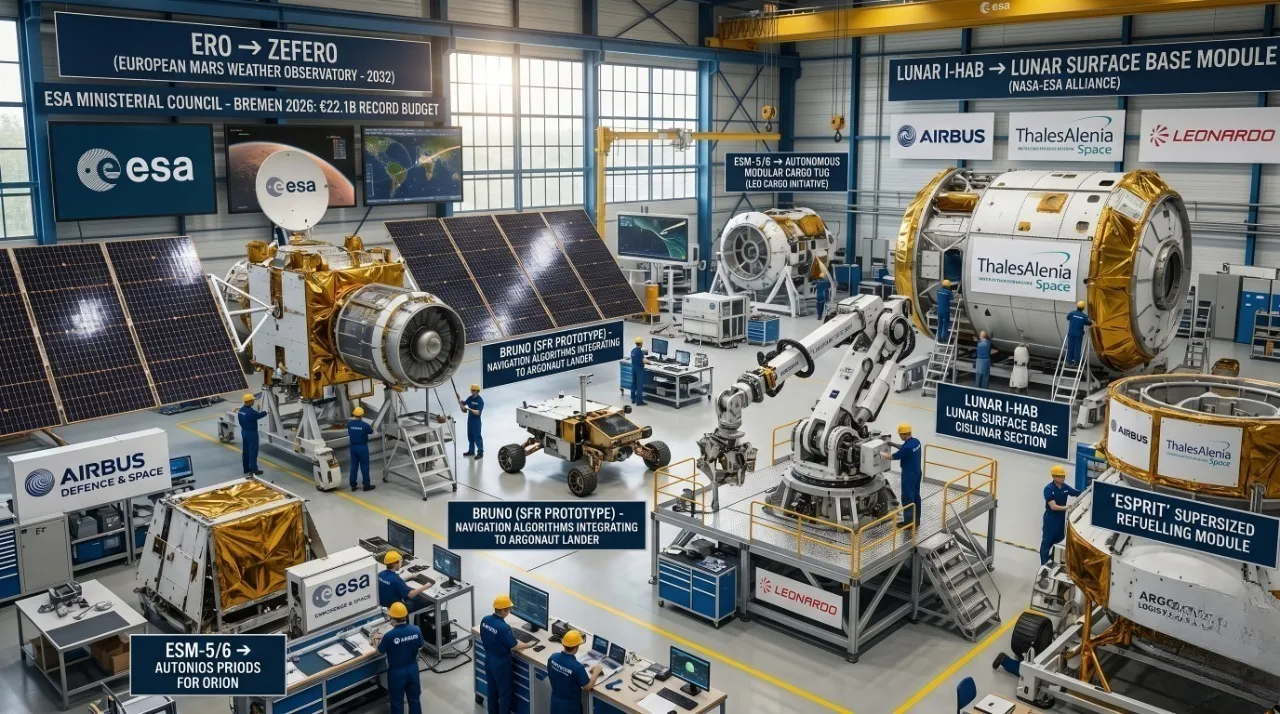
Hello, explorers. The global architecture of space exploration is undergoing a radical metamorphosis in mid-2026. For decades, the interplanetary fabric was based on a symbiosis between the European Space Agency and NASA, but drastic American budget cuts have caused a massive earthquake. With a six billion dollar reduction in the North American agency, severe unilateral decisions have been made: altering the crewed Artemis program and restructuring the unsustainable Mars Sample Return framework. This is where we must demystify space glamour with a realistic smile; progress off-Earth is slow, inherently bureaucratic, and tied to terrestrial political fluctuations. Europe suddenly found itself with flight hardware valued at billions, already forged and assembled, that suddenly had no mothership. It is the everyday equivalent of having bought and installed the engine of a hyper-sports race car, only for the chassis manufacturer to call you on the phone to tell you they are canceling production due to lack of funds.
The robotic legacy of Mars and the survival of mechatronics
The return of Martian samples was the scientific priority of the decade, an interplanetary choreography that included extracting basaltic rock and andesite core samples from the Jezero crater using a swarm of vehicles. The European Sample Fetch Rover, designed for this collection, was canceled in the offices, but its industrial development left us with Bruno, an advanced full-scale prototype. Its high-speed autonomous navigation brain will not die in a British warehouse, but will be reassigned to the imminent Argonaut lunar lander. On the other hand, the monumental Sample Transfer Arm survives unscathed. This Italian robotic arm features seven degrees of freedom and kinematic redundancy —imagine a human arm equipped with an extra elbow and extra joints—, allowing it to contort and solve trajectory equations in tiny spaces without colliding with the surrounding fuselage. And this is where, curiously, the crisis turns into a brilliant opportunity. The gigantic European Earth Return Orbiter, having been left without the NASA samples it was supposed to collect, will not be scrapped. Backed by a historic ESA budget of over twenty-two billion euros, it will be transformed into ZefERO, a majestic observatory dedicated to Martian meteorology and geology.
The cislunar controversy and the tactical recycling of habitats
Closer to home, the Lunar Gateway station has suffered its own head-on collision with reality. Political rumors in the United States Congress pointed to the supposedly unrecoverable corrosion of the European HALO and I-HAB habitable modules. The engineering reality, far from sensationalism, is much more mundane: it is a well-documented and predictable metallurgical behavior in aluminum alloys subjected to space treatments, similar to what was already solved decades ago on the International Space Station. With the orbital deployment of the Gateway station canceled in favor of surface bases, European engineers will masterfully repurpose the I-HAB module. Having been previously compacted in its design to fit into the payload fairing of commercial rockets, it is now the perfect volumetric candidate to descend directly and become humanity's first pressurized refuge on the polar lunar regolith. Similarly, the surplus service modules from the Orion program —the ESMs— will be stripped of their human life support systems to be reborn as powerful automated cargo tugs, competing head-to-head in the commercial sector. The European Space Agency has stopped being an expectant minority partner to forge, through industrial pragmatism and cutting-edge recycling, a true end-to-end operational sovereignty. It has been a true pleasure unraveling this complex analytical landscape with you all, keep looking up. See you on the next orbit.
Related
Missions
- 🛰️ Opportunity
Related news and articles
- 📰 The Strategic Shift Toward the Moon Base Reconfigures ESA's Alliances With NASA 15 JUN 2026
- 📰 The Rebirth of Rosalind Franklin: Geopolitics, Martian Drills, and the Search for Subsurface Life 26 NOV 2025
- 📰 Catastrophe at Cape Canaveral: Blue Origin's New Glenn Explosion Paralyzes Lunar Race and Amazon Leo Deployment 30 MAY 2026
- 📰 Mars in May 2026: Technical and Geopolitical Reality 2 MAY 2026
Marspedia terms
Enjoyed it? Keep exploring
Back to all news