
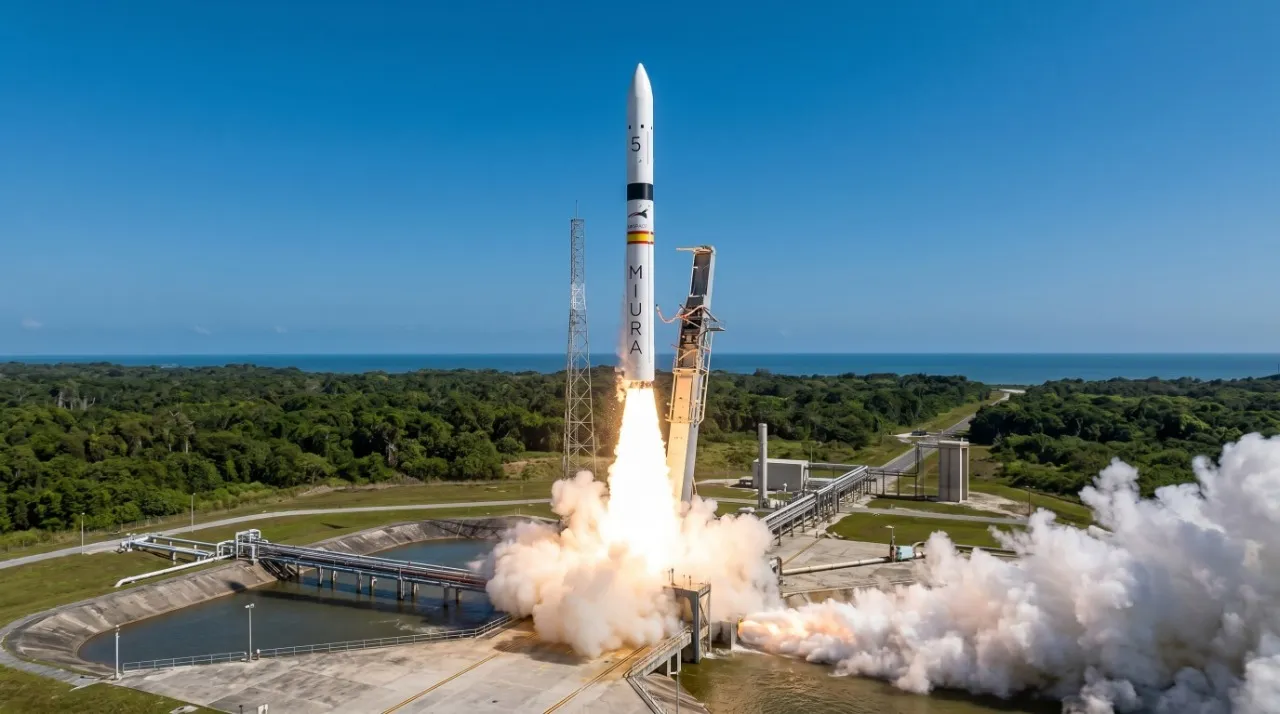
Hello, cosmos enthusiasts! If we analyze the current geopolitical aerospace chessboard this May 2026, the European picture is defined by a painful structural vulnerability. Trapped between the chronic delays of immense institutional launchers and the suffocating American commercial monopoly, autonomous access to space seemed like an unreachable mirage for the Old Continent. However, in the midst of this strategic crisis, the Spanish corporation PLD Space emerges not with flashy infographics or decades-away promises, but with welded metal and fresh cement. Its short-term objective focuses exclusively on the Miura 5 orbital launcher, a vehicle that has definitively abandoned virtual simulations to become an imminent logistical reality.
Financial muscle and the thermodynamic hell
Aerospace progress is bureaucratic, frustratingly slow and, above all, an insatiable devourer of capital. Curiously, the company has managed to navigate the deadly financial valley of death that buries startups by recently closing a historic 180 million euro Series C round, led by the Asian giant Mitsubishi Electric, coupled with a crucial structured debt loan from the European Investment Bank. This robust financial oxygen directly feeds the aggressive flight hardware production line in Teruel. Paper designs are a thing of the past; today the company manufactures the sophisticated TEPREL-C engines in semi-series. These first-stage thrusters deal with the hell of combustion through a complex regenerative cooling cycle —imagine using your own freezing water canteen, circulating it glued to your temples to absorb all your immense body heat before finally drinking the preheated liquid—. The board prefers the harsh reality of trial and error, subjecting its models to brutal destructive tests, such as the recent deliberate blowing up of a second stage in US ballistic facilities to certify, without legal or technical doubt, the vital flight termination system.
Kourou takes concrete shape against the clock
While the engines roar on the test benches of the Iberian Peninsula, the true finish line takes physical shape in the middle of the South American jungle. The historic and revered Guiana Space Centre in Kourou is the demanding setting for frantic civil engineering works built on the old Diamant launch area. After overcoming the ironclad and sovereign safety validations of the French space agency, workers are building at a forced march what will be the private and exclusive launch pad for the Spanish rocket. The non-negotiable objective is to finish this very summer the complex integration areas, the massive vehicle erector and the labyrinthine cryogenic fluid conduits. Moving huge aerospace alloy cylinders from Europe to French Guiana does not respond to an exotic logistical whim —the extreme proximity of this port to the Earth's equator acts as a gigantic natural slingshot, granting the vehicle an immense free rotational boost that is indispensable to maximize the mass of the commercial payload it will manage to inject into the absolute vacuum—.
Final reflection on orbital imminence
The enormous technical effort invested in the Miura 5 program is today the most feasible and immediate lifeline to recover autonomous European access. The coming months are deeply critical and the margin for error borders on the microscopic, but the progress is genuine, audited and stays completely away from the false media enthusiasm that does so much damage to the industry. There are many thousands of liters of biokerosene left to burn in a controlled manner before being able to claim victory in Earth orbit. From our position, we will continue to scrutinize every weld and every telemetry sensor with a magnifying glass to bring you the purest reality behind the space steel. A big hug and see you in our next in-depth analysis!
Related
Related news and articles
Enjoyed it? Keep exploring
Back to all news