
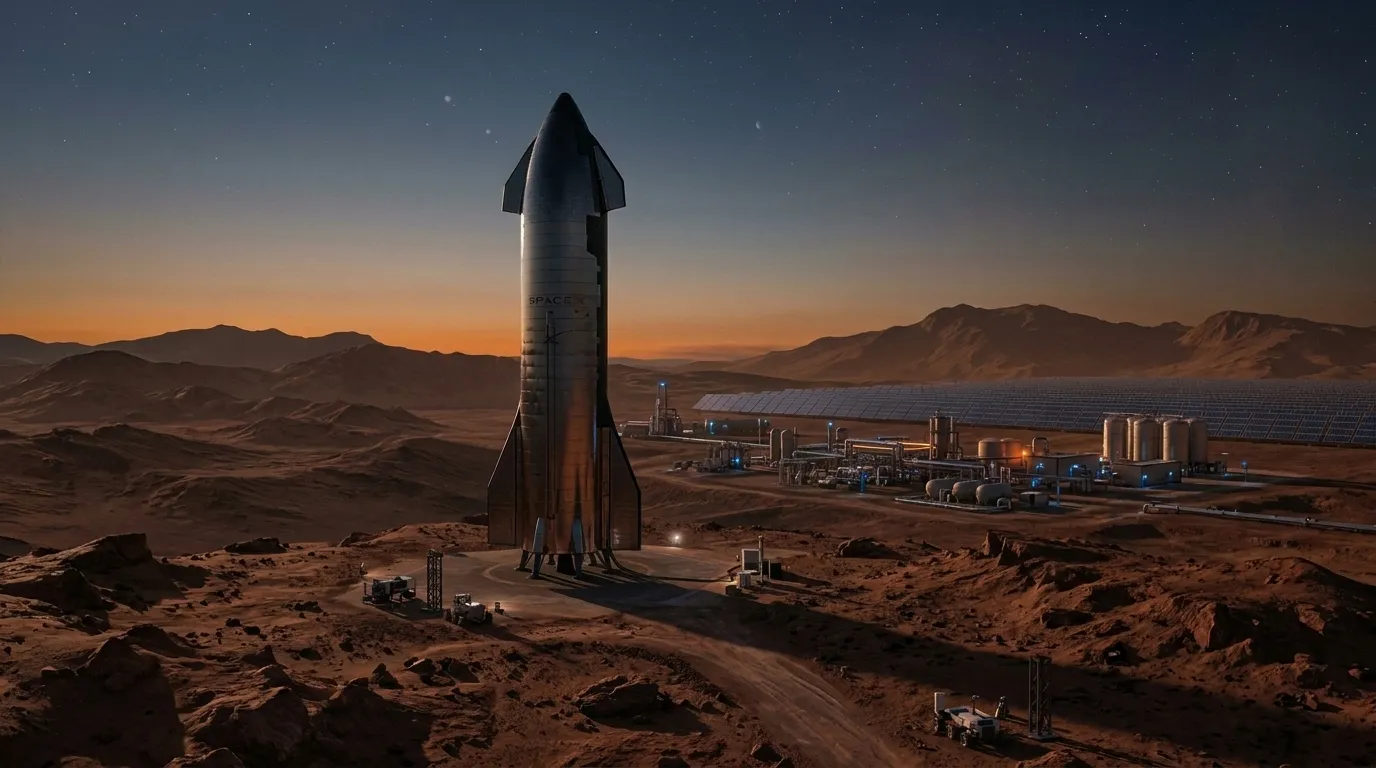
La visión de convertir a la humanidad en una especie multiplanetaria ha dejado de ser un tema exclusivo de la literatura de ficción para transformarse en un ambicioso plan de ingeniería aeroespacial. En el centro de esta audaz propuesta se encuentra la colosal nave Starship de SpaceX, diseñada para transportar más de cien toneladas de carga y tripulación hacia el planeta rojo. Sin embargo, cuando analizamos los límites de la física y la química práctica, surge una pregunta inevitable: ¿es realmente factible el plan de SpaceX para colonizar Marte utilizando la Starship? Aunque la arquitectura promete revolucionar el transporte espacial mediante la reutilización rápida, el éxito de toda la empresa no depende únicamente de la potencia de los motores Raptor, sino de nuestra capacidad para resolver un monumental desafío logístico y químico en la superficie de un desierto inhóspito a millones de kilómetros de casa.
La reacción de Sabatier y la producción local de combustible
La Starship es una nave de dimensiones colosales que requiere una inmensa cantidad de combustible para despegar de Marte y emprender el viaje de regreso a la Tierra. Dado que es físicamente imposible transportar desde nuestro planeta todo el combustible necesario para la ida y la vuelta —ya que el peso extra exigiría cohetes infinitamente más grandes—, SpaceX debe recurrir a la Utilización de Recursos In-Situ (ISRU). El plan se basa en un proceso químico clásico conocido como la reacción de Sabatier, descubierta a principios del siglo XX. Esta reacción combina el dióxido de carbono de la atmósfera marciana con hidrógeno para producir metano y agua bajo temperaturas elevadas y la ayuda de un catalizador de níquel o rutenio. El metano sintetizado, combinado con el oxígeno obtenido de la electrólisis del agua, conforma el "methalox", el combustible criogénico que alimenta los motores de la Starship.
Curiosamente, aunque la química detrás de la reacción de Sabatier es sencilla y está perfectamente dominada en laboratorios terrestres, su aplicación en el planeta rojo presenta dificultades geológicas severas. El dióxido de carbono es abundante en el aire marciano, pero el hidrógeno debe obtenerse mediante la descomposición eléctrica de moléculas de agua. Para ello, los primeros colonos deberán localizar y excavar depósitos masivos de hielo de agua subterráneo, una tarea que requiere maquinaria pesada autónoma capaz de perforar y fundir el permafrost bajo condiciones de frío extremo. Extraer agua en Marte no es comparable a abrir un grifo; se asemeja más a tener que minar tu propio suministro de agua helada en el sótano congelado de una montaña rocosa utilizando herramientas que deben funcionar sin mantenimiento humano durante meses. Si la extracción de agua falla, la tripulación quedará atrapada permanentemente sin combustible de retorno.
Las limitaciones de masa y el reto del reabastecimiento
Para repostar una sola Starship y permitir su regreso a la Tierra se necesitan aproximadamente 1.200 toneladas métricas de propelente líquido. Generar esta descomunal masa de combustible en un entorno de baja presión exige una infraestructura industrial de proporciones colosales. Los reactores Sabatier, las unidades de electrólisis, los sistemas de purificación de agua y las plantas de licuación criogénica representan toneladas de equipo que la propia Starship debe transportar en sus primeros viajes de carga. La paradoja de este sistema es que el peso de la propia refinería química y sus fuentes de energía amenaza con consumir gran parte de la capacidad de carga de las primeras naves, limitando el espacio disponible para los suministros vitales de los colonos. Es como si para hacer un viaje de larga distancia en coche tuvieras que llevar la gasolinera entera y una refinería de petróleo en el maletero.
Además del peso del equipamiento, el consumo de energía eléctrica de esta planta de combustible es gigantesco. La electrólisis del agua y la posterior congelación y almacenamiento del metano y el oxígeno líquido exigen megavatios de potencia constante. Para abastecer esta demanda, SpaceX planea desplegar hectáreas de paneles solares flexibles o pequeños reactores nucleares de fisión. Sin embargo, los paneles solares en Marte son significativamente menos eficientes que en la Tierra debido a la mayor distancia al sol y a las frecuentes tormentas de polvo que cubren la atmósfera durante meses, bloqueando la luz solar y depositando una capa abrasiva sobre las células fotovoltaicas. Limpiar manualmente miles de metros cuadrados de paneles en un entorno hostil añade una carga operativa descomunal para la tripulación.
El factor temporal y la realidad de las ventanas de lanzamiento
El último límite insoslayable de la colonización marciana es la mecánica celeste. Debido a las órbitas elípticas de la Tierra y Marte, la distancia entre ambos mundos varía constantemente. La ventana de lanzamiento óptima para realizar el viaje con el menor consumo de combustible solo se abre una vez cada 26 meses, un período conocido como oposición orbital. Esta limitación temporal dicta el ritmo de toda la logística de la misión: si una Starship no logra repostar a tiempo o sufre un fallo técnico menor durante la ventana de lanzamiento, la tripulación deberá esperar más de dos años en Marte antes de tener otra oportunidad de regresar.
Esta escala temporal convierte el plan de colonización en un proyecto de paciencia multigeneracional. Lejos de los plazos optimistas que suelen anunciarse en los medios, establecer una colonia autosuficiente requerirá el envío constante de flotas de naves durante décadas, asumiendo un coste económico y un riesgo humano sin precedentes. La Starship es una herramienta de ingeniería revolucionaria, pero el camino hacia una civilización multiplanetaria será lento y exigirá un esfuerzo técnico colosal. La física del cosmos no admite atajos de marketing, pero la perseverancia humana siempre ha sido experta en resolver lo imposible. Hasta la próxima lección cósmica, compañeros de exploración.
Relacionado
Noticias y artículos relacionados
- 📰 El precio de forzar el camino a Marte: luces y sombras del plan interplanetario de Chun Wang con Starship 30 MAY 2026
- 📄 El desafío de cultivar en Marte: por qué la agricultura espacial es más compleja que en la ciencia ficción 25 JUL 2026
- 📄 El mar olvidado: ¿existió realmente un océano gigante en el norte de Marte? 21 JUL 2026
- 📄 La ventana de lanzamiento a Marte: ¿por qué no podemos viajar al planeta rojo cuando queramos? 18 JUL 2026
Términos de Marspedia
¿Te ha gustado? Sigue explorando
Volver al Blog