
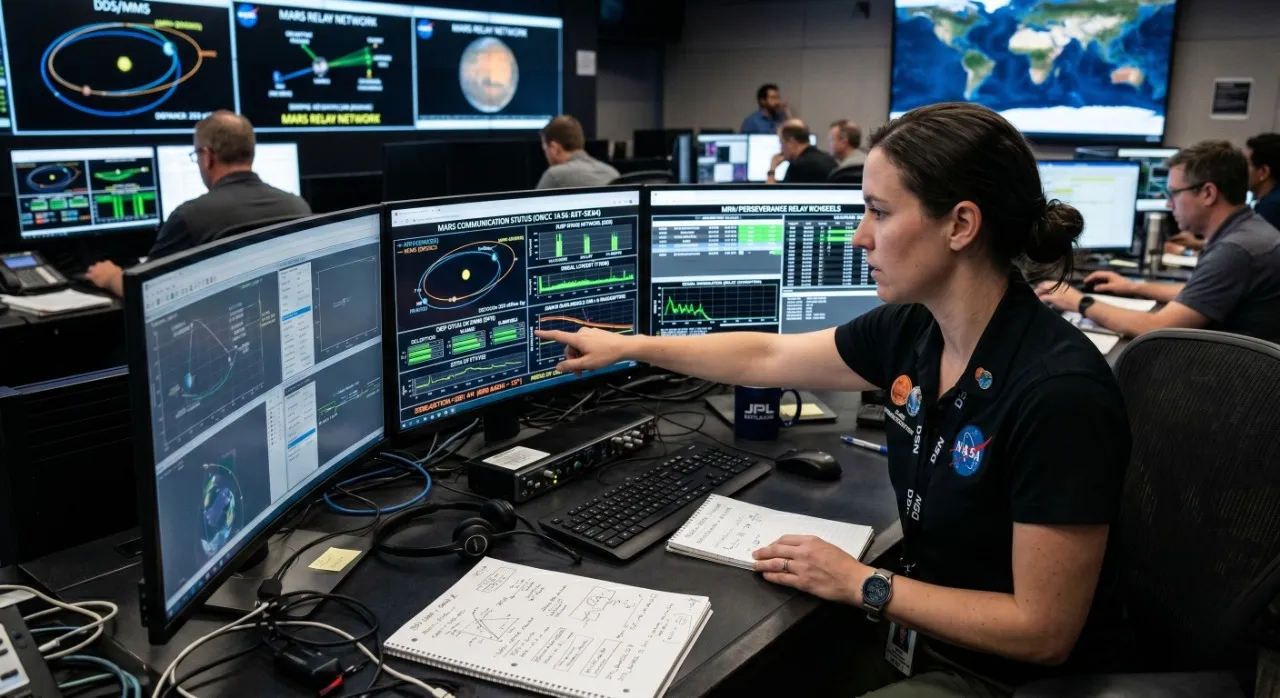
Imaginemos por un instante que nos encontramos en una vibrante cafetería en una futura colonia marciana. Al intentar enviar un mensaje de texto a un amigo en la Tierra, o al buscar una receta en nuestro navegador web, nos topamos de frente con una realidad inamovible: el tejido mismo del cosmos. La velocidad de la luz en el vacío es un límite absoluto. Esta barrera física engendra el denominado retraso de comunicación interplanetario, un abismo temporal gobernado por la danza de ambos mundos. Curiosamente, debido a las órbitas elípticas de la Tierra y Marte, la distancia entre ellos no es fija; oscila cíclicamente. En su máximo acercamiento, los planetas se aproximan a unos 55 millones de kilómetros, pero cuando el Sol se interpone directamente entre ambos, la distancia se dispara hasta los 401 millones de kilómetros. El veredicto es claro: una señal de radio tarda entre 3 y 4 minutos en cruzar el vacío en el mejor de los escenarios, y hasta 24 minutos en el peor.
La muerte de la interactividad y el nacimiento del desfase temporal
Esta fluctuación divide las operaciones espaciales en dos dimensiones de tiempo distintas. Por un lado, el tiempo del vehículo mide el momento exacto en que ocurre un suceso en el planeta rojo; por el otro, el tiempo de recepción en la Tierra marca el instante en que esa información llega a nuestras estaciones humanas. Esta brecha se vuelve dramática durante los aterrizajes de las misiones robóticas. Cuando el rover Perseverance tocó suelo marciano, la señal tardó más de 11 minutos en alcanzar las pantallas de control. Dado que la maniobra completa de aterrizaje dura apenas siete minutos, el vehículo ya estaba a salvo en la superficie —o reducido a chatarra— mucho antes de que supiéramos que había entrado en la atmósfera. Toda intervención humana directa en tiempo real queda anulada por la geometría del espacio.
Para la experiencia humana, acostumbrada a la inmediatez digital, este desfase resulta catastrófico. Las redes telefónicas y las videollamadas terrestres requieren que el retraso sea casi imperceptible para mantener una conversación fluida; si el retraso supera el medio segundo, el diálogo se rompe porque ambas personas empiezan a hablar a la vez. En el universo de los videojuegos en línea, donde se exigen respuestas instantáneas en fracciones de segundo, la distancia marciana convierte cualquier intento de partida en una imposibilidad. Un retraso mínimo de seis minutos para que la señal vaya y vuelva rompe el cordón umbilical de la interactividad. Incluso las tecnologías de dinero digital como el Bitcoin, que necesitan que ordenadores de todo el mundo se pongan de acuerdo cada diez minutos, se romperían en el espacio al no poder recibir los datos a tiempo, obligando a Marte a tener su propia economía local separada.
Por qué el internet de la Tierra se rompe en el espacio
El problema fundamental radica en que el internet actual fue diseñado bajo el supuesto de que los datos viajan por autopistas continuas y sin interrupciones. El sistema tradicional funciona como un diálogo constante donde el ordenador que envía la información necesita que el ordenador que la recibe le mande una señal de "recibido" para poder continuar. Para entenderlo con una analogía cotidianas, es como enviar una carta por correo postal y negarse a escribir la siguiente página del folio hasta recibir la confirmación de que la persona leyó la anterior. En la Tierra este proceso toma milésimas de segundo, pero en el espacio, los relojes de los sistemas informáticos se desesperan y dan por muerto el enlace mucho antes de que la confirmación pueda completar el viaje de vuelta. El ordenador emisor asume erróneamente que los datos se han perdido por un colapso en la red, frena en seco el envío de nueva información y entra en un bucle infinito de esperas y errores que congela la conexión.
A este bloqueo se suma que el internet terrestre no tolera que los paquetes de datos lleguen desordenados o con piezas faltantes. Si una sola pieza se pierde en el vacío, el sistema detiene por completo la descarga de todo lo demás, obligando a pausar la pantalla durante decenas de minutos hasta que esa pequeña pieza sea reenviada con éxito. Incluso los cimientos de los mensajes digitales se rompen: las normas de internet destruyen automáticamente cualquier paquete de datos si este pasa más de cuatro minutos viajando sin llegar a su destino, una regla de seguridad diseñada para evitar atascos en la Tierra que desintegraría la información espacial mucho antes de que lograra acercarse a Marte.
El rugido del Sol y las orejas gigantes de la Tierra
Por si la distancia fuera poco, el movimiento celestial impone apagones completos. Cada dos años, el Sol se sitúa exactamente en línea recta entre la Tierra y Marte. Durante aproximadamente tres semanas, la atmósfera exterior del Sol —un océano de gases supercalientes y partículas cargadas de electricidad— actúa como una gigantesca pantalla de interferencias que deforma las ondas de radio y corrompe los mensajes. Enviar instrucciones a una nave en esta fase es un peligro absoluto; un comando deformado por el ruido solar podría hacer que el ordenador de a bordo se confunda y apague sus sistemas vitales. Curiosamente, durante la conjunción de noviembre de 2023, las naves en órbita quedaron en silencio absoluto durante un día y medio, obligando a los vehículos a confiar ciegamente en sus pilotos automáticos.
Para escuchar los débiles susurros de radio que logran escapar de este laberinto cósmico, la humanidad depende de la Red de Espacio Profundo. Compuesta por tres complejos de antenas gigantes situados en Madrid (España), California (Estados Unidos) y Canberra (Australia), esta red asegura que siempre haya una estación apuntando a Marte mientras nuestro planeta gira. Las señales emitidas por las sondas espaciales viajan con potencias irrisorias, similares a la bombilla pequeña de una nevera y, al dispersarse por el vacío, llegan a la Tierra rozando la nada absoluta. Para rescatar estas señales del ruido de fondo del universo, las colosales antenas terrestres de 70 metros de diámetro deben enfriar sus motores y receptores casi hasta el cero absoluto con helio líquido, congelando los circuitos para que los átomos no se muevan y no generen interferencias internas.
La red de mensajería interplanetaria y el futuro del láser
Para habitar el planeta rojo de forma segura, los científicos han tenido que cambiar las reglas del juego mediante una tecnología llamada Redes Tolerantes a Retrasos. En lugar de exigir que emisor y receptor estén conectados al mismo tiempo, este sistema funciona como el correo electrónico tradicional o una red de postas: los datos se empaquetan en bloques independientes que viajan de estación en estación guardándose de forma segura. Si una nave se esconde detrás de Marte y se pierde la conexión, el nodo intermedio no borra los datos; los almacena pacientemente en su memoria local hasta que el cielo vuelve a estar despejado para reenviarlos al siguiente punto.
Esta tecnología transformará por completo la experiencia de navegar por la red en una futura colonia. El internet marciano no funcionará conectándose directamente a los servidores de la Tierra en tiempo real, sino a través de gigantescos servidores espejo instalados en el propio suelo marciano. Al igual que una biblioteca que compra copias de todos los libros del mundo, estos servidores albergarán copias completas de páginas web, bases de datos y plataformas de vídeo. Cuando un colono busque información, la pantalla responderá al instante porque los datos están físicamente en Marte. Si alguien solicita algo que no está en la memoria local, la petición se enviará de forma automática y silenciosa hacia la Tierra, la cual empaquetará la respuesta y la mandará de vuelta en el siguiente viaje espacial de datos, actualizando la biblioteca marciana de forma diferida.
El futuro de esta red ya se está probando con comunicaciones ópticas por láser. Al sustituir las ondas de radio tradicionales por haces de luz láser invisible, se consigue que el mensaje viaje en un rayo extremadamente concentrado que no se dispersa tanto en el espacio. Esto permite enviar una cantidad de información hasta cien veces mayor usando antenas mucho más pequeñas y ligeras. Los experimentos recientes de la NASA ya han logrado enviar vídeos en alta definición desde distancias astronómicas. El gran desafío de esta ingeniería es el apuntamiento: dado que la luz tarda minutos en viajar, el láser no debe apuntar a donde vemos a la Tierra en ese instante, sino al lugar preciso del espacio donde la Tierra estará minutos después, disparando a ciegas pero con una precisión matemática asombrosa.
A medida que la humanidad extiende sus alas hacia el sistema solar, debemos aceptar que la inmediatez digital es un lujo puramente terrestre. La insalvable barrera del tiempo espacial no es un defecto de nuestra tecnología, sino una ley fundamental del lienzo cósmico en el que estamos escribiendo nuestra historia. La construcción de un internet interplanetario basado en la paciencia del almacenamiento y la potencia de la luz láser nos recuerda que, para conquistar otros mundos, primero debemos aprender a conversar con ellos respetando el ritmo pausado que dicta el universo.
Relacionado
Misiones
- 🛰️ Perseverance
Noticias y artículos relacionados
- 📄 El desafío de cultivar en Marte: por qué la agricultura espacial es más compleja que en la ciencia ficción 25 JUL 2026
- 📄 El precio biológico de colonizar Marte: ¿puede el cuerpo humano sobrevivir a la gravedad parcial? 13 JUN 2026
- 📄 Valles Marineris y la cicatriz tectónica que reescribió la historia de Marte 11 JUN 2026
- 📄 ¿Cómo oscurecen las tormentas de polvo globales el planeta Marte? 9 JUN 2026
Términos de Marspedia
¿Te ha gustado? Sigue explorando
Volver al Blog